Classic Solitaire NETFLIX
- 4.5
- Rating
- 1.00M
- Installs
- Free
- Price
 Analysis by App-foxy
Classic Solitaire NETFLIX is the kind of card game I open when I want something familiar, quiet, and easy to understand within seconds. It takes the traditional Klondike format and presents it as a focused mobile game from Netflix, Inc., rather than trying to turn solitaire into a complicated collection of modes or distractions. I found that simplicity useful: the game is ready for a short break, but it still gives me enough room to think carefully about every move.
The game is free to play and carries an Everyone age rating, which makes it suitable for a broad audience. It was released on December 2, 2022, and the current version is 1.1.1.99. On Android, it requires version 8.0 or later. Those details matter most if you are using an older phone or tablet, but the larger question is whether this particular solitaire experience feels comfortable enough to keep installed. In my view, it succeeds when you want a clean, traditional card routine, while it is less convincing if you expect a large, constantly changing card-game package.
How the game feels during ordinary play
I’ll focus on what makes an ordinary hand feel engaging: how I decide on a move, what changes when it works, and why a completed round can make me want to try again. I’ll also look at the small choice that helps keep a quick break relaxing rather than turning it into a rushed attempt to win.
You May Also Like

 Blood Strike: 2.5 Anniversary
Blood Strike’s Loadouts Turn Every Drop Into a Tactical Gamble
A close look at Blood Strike’s custom loadouts: how fast access to signature weapons reshapes its battle royale rhythm, rewards preparation, and narrows the gap between fights.

 Pandora - Music & Podcasts
Pandora’s Music Is Easy to Start, but Harder to Recover
Pandora’s strength is its low-effort path from a seed to a station. Its weak spot is how much confidence it asks you to place in connection, setup, and quiet recovery.

 8 Ball Pool
 Is Built on Rivalries, Rematches, and Routine
A close look at the rivalries, rematches, shared routines, and unanswered safety questions that turn a quick pool match into a persistent mobile community.

 Samsung Music
’s Quiet Strength Is Playing What You Already Own
Its reach comes less from spectacle than from dependable access to a personal library. That simplicity is both the app’s strongest retention engine and its ceiling.

 AccuWeather: Weather Radar
AccuWeather Review: A Quick, Clear Forecast for Everyday Decisions
For everyday plans, the best forecast is the one you can understand quickly. AccuWeather makes rain timing, radar, and local conditions easy to act on, with a few trade-offs.

 Hill Climb Racing
Why Hill Climb Racing Still Turns Crashes Into One More Run
A tiny car, a bumpy hill and one more upgrade: Hill Climb Racing keeps resurfacing because its simple chaos makes every near-miss feel personal.
More From Our News Desk



A familiar format that gets out of the way
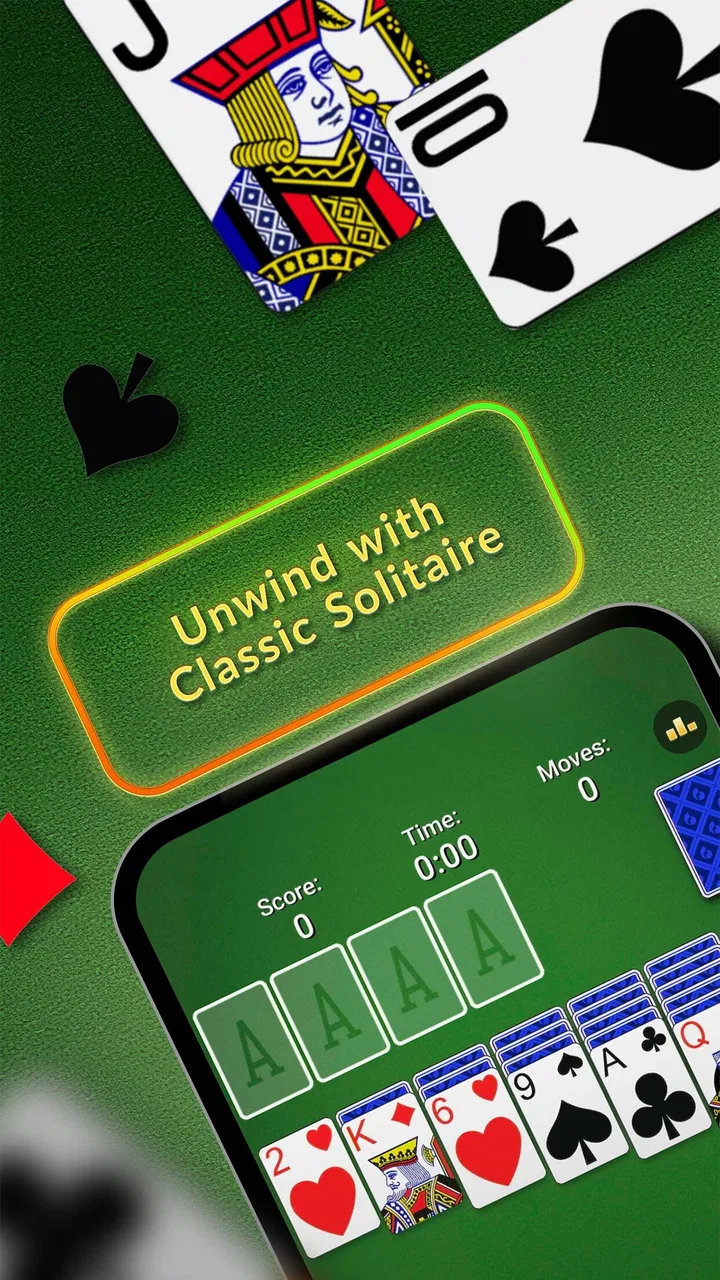
The central appeal is Klondike solitaire. You arrange cards, uncover hidden ones, build sequences, and move cards toward their final destinations. Anyone who has played classic solitaire will understand the basic goal immediately, while newcomers can learn by experimenting without facing an intimidating rule set. I appreciate that the game’s identity stays tied to the card table instead of being buried under unrelated systems.
That familiarity also makes the game well suited to small gaps in the day. I can imagine playing a hand while waiting for an appointment, taking a short pause between tasks, or winding down before sleep. A hand does not demand the same uninterrupted attention as a competitive multiplayer game, so it is easy to stop when something else needs my attention. The trade-off is that solitaire’s calm pace may feel too restrained for players who want constant action or social competition.
The best reason to choose this version is its focused Klondike experience. It is not trying to replace every kind of card game. Instead, it works as a dependable digital deck for people who already enjoy sorting possibilities and making decisions with incomplete information.
Speed expectations on a phone or tablet
In normal use, I would expect the game to feel responsive because its main activity is a straightforward card layout rather than a visually demanding action environment. The important kind of speed here is not high frame-rate movement; it is how quickly I can begin a hand, recognize the available cards, and make the next move without the interface becoming an obstacle. Classic Solitaire NETFLIX is designed around that simple rhythm.
There is also a practical distinction between the game opening quickly and a hand being easy to solve. A difficult layout can take time because I am thinking, not because the game is struggling. That is one of the pleasant aspects of solitaire: the pauses belong to the player. When I deliberately slow down to inspect whether moving a sequence will expose a useful card, the experience feels thoughtful rather than sluggish.
For a quick session, I would avoid treating every move as automatic. A better approach is to scan the tableau first, look for moves that reveal face-down cards, and resist empty-column moves unless they create a clear advantage. This makes the game feel faster in practice because I spend less time undoing impulsive decisions and restarting a poor line of play.
What happens during longer or repeated sessions
Heavy use in this game means playing hand after hand, not loading a large world or running a demanding simulation. That makes it a reasonable companion for repetitive breaks, but it also exposes the limits of the format. After several rounds, the challenge comes mainly from improving my choices and staying attentive. The presentation does not need to overwhelm me, yet some players may eventually want more variation than a focused Klondike game provides.
One useful habit is to treat repeated sessions as practice in decision quality rather than simply chasing quick wins. Before moving a card, I try to ask whether the move opens the tableau, improves the foundation, or preserves future options. That small change makes the game more interesting over time. It also reduces the temptation to move every available card immediately, which can leave the layout less flexible.
Another practical use is as a low-pressure mental reset. I can play one hand without committing to a long activity, then close the game when the hand ends. For someone who wants a gentle puzzle between demanding tasks, that structure is more useful than a game that constantly pushes notifications, events, or competitive goals. At the same time, anyone looking for a deep progression system should understand that the appeal here is the card play itself.
Stability and recovering from interruptions
Reliability matters even in a simple card game. A solitaire session is often started casually, so an interruption can happen at any moment: a phone call, a message, a change of location, or simply the decision to put the device away. I value a game more when returning to it feels straightforward rather than requiring me to remember a complicated chain of menus.
My practical advice is to finish a natural decision point before switching away whenever possible. If I am in the middle of planning several moves, leaving immediately can make it harder to reconstruct my intended sequence later. This is not a criticism of the card format; it is a useful way to play any turn-based puzzle on a phone. The game is most comfortable when I treat each hand as a contained session instead of assuming every pause will feel invisible.
I also prefer to keep expectations realistic about recovery. A card game can be easy to understand after returning, but that does not guarantee that every interrupted moment will preserve exactly the context I had in mind. For important downtime, I would start a fresh hand when I know I may be distracted. That keeps the experience relaxed and avoids turning a short break into a memory exercise.
Resource demands and older devices
Because the game centers on a traditional card table, it should appeal to people who do not want a resource-heavy mobile experience. The minimum Android requirement is 8.0, so owners of devices below that version will need a newer compatible device to use it. For everyone else, the more relevant question is whether the phone has enough everyday room for another installed game and whether the player is comfortable with the game’s own presentation.
I would be especially comfortable recommending it for a secondary device used during travel or quiet breaks, provided that device meets the operating-system requirement. Solitaire does not need the same kind of attention as a fast multiplayer title, so it fits well on a phone that is used for reading, messaging, and occasional games. Still, I would not call it the ideal choice for someone who wants to minimize every application on an older handset and only keeps games that offer a wide range of content.
On a tablet, the card layout can be easier to inspect because a larger screen gives the tableau more breathing room. On a small phone, I would pay closer attention to accidental taps and avoid rushing through moves. The difference is not about changing the rules; it is about how comfortably I can read the arrangement and select the card I intend to move.
How it compares with other solitaire choices
The usual alternatives fall into a few groups. Some solitaire games focus on large collections of variants, daily challenges, customization, or an especially busy reward structure. Others are extremely bare-bones and behave almost like a digital deck with minimal personality. Classic Solitaire NETFLIX sits closer to the focused side: its strength is that the main Klondike activity remains the reason to open it.
That makes it a better fit than a feature-packed alternative for a player who wants less clutter and a familiar routine. I would choose it when I want to concentrate on arranging cards rather than browsing a catalog of modes. Conversely, I would look elsewhere if I specifically wanted several solitaire variants, a strong competitive layer, or a game built around collecting rewards and unlocking visual extras.
The Netflix connection may also influence the decision for people who already use Netflix and prefer games from the same developer family. The important point, however, is that the game should stand on its card play. I would not install it merely because of the name; I would install it because a clean Klondike session is exactly what I want. That is a healthier expectation and makes the choice easier.
Who will get the most from it
I recommend this game most readily to three kinds of players. First are longtime solitaire fans who want a familiar version on a current Android device. Second are casual players who need something that can fill five or ten quiet minutes without learning a new fictional world. Third are people who enjoy planning several moves ahead and do not need a social or competitive layer to stay interested.
It can also work well for a household where different generations want the same simple card activity. The Everyone rating supports that broad accessibility, although each player will still have different expectations about challenge and presentation. A person who likes classic cards may appreciate the restraint, while a younger player accustomed to constant unlocks may find the experience too modest.
I would suggest skipping it if your ideal mobile card game includes online opponents, frequent new content, many rule variations, or a strong sense of progression. I would also skip it if you dislike solitaire’s dependence on patience and probability. No interface can remove the occasional frustrating layout or make every round feel equally satisfying. The game is honest about its basic appeal: the pleasure comes from solving the arrangement.
Small habits that improve the experience
My first tip is to prioritize uncovering face-down cards over making a move that merely looks tidy. Revealing information usually gives me more useful choices than immediately organizing cards that are already visible. This is particularly important when two moves appear equally legal but only one changes what I can see.
My second tip is to preserve flexibility. Moving a long sequence may feel productive, but it can also block a column or remove a useful option. I try to consider what the empty space will accomplish before using it. That habit turns a familiar game into a more deliberate puzzle and helps prevent the common mistake of playing the most obvious move instead of the most valuable one.
My third tip is to use short sessions as a reason to stop making rushed decisions. If I only have a few minutes, I do not need to force a win. I can make one careful move, see whether it opens a new route, and end the session naturally. This approach is especially useful on a phone, where the temptation to tap quickly can be stronger than the desire to plan.
A final tip is to compare your enjoyment across session lengths. If one hand is satisfying but repeated play becomes flat, that tells you the game is best used as a compact break rather than a primary pastime. I see that as a useful boundary, not a flaw. Knowing when the focused format has given you enough value keeps the game from becoming repetitive.
Value, audience, and long-term appeal
Classic Solitaire NETFLIX is free, which removes the biggest barrier to trying it. Its audience is also substantial: the game has passed one million installs, with an average rating of 4.8 from around twenty-two thousand ratings and roughly one thousand two hundred written reviews. Those figures suggest that many players respond well to the straightforward format, although popularity alone cannot tell me whether it matches my own preferences.
The long-term value depends on how much enjoyment I get from Klondike itself. If I like replaying familiar layouts and improving my choices, the game can remain useful for a long time because each hand asks me to reassess the available path. If I need constant novelty, the free price will not solve the problem; I will still want a broader card collection or a different genre after the initial appeal fades.
I also think the game works best when I do not demand that it be something else. It is not a replacement for a social card table, a story-driven game, or an energetic puzzle competition. It is a compact solitaire option with a clear purpose. That clarity is its advantage, but it naturally limits the audience.
My performance verdict
After looking at the way it fits into real phone use, I see Classic Solitaire NETFLIX as a sensible choice for players who value a focused, low-pressure card game. Its simple format should keep the experience approachable, and its modest demands make it more suitable for ordinary breaks than many visually intense games. The Android 8.0 requirement is the main device checkpoint I would consider before installing it.
My recommendation is strongest for a player who wants to open a game, play Klondike without a long learning curve, and leave whenever the break is over. I would be more cautious with anyone who needs extensive variety, multiplayer interaction, or a progression system to maintain interest. The game’s limitations are closely tied to its identity, so they are easy to understand before committing.
My final take: choose it for calm, familiar solitaire sessions, not for a feature-packed card-game library. In that specific role, it makes sense, especially for people who prefer thoughtful moves over visual noise. I would install it on a compatible Android device when I wanted a reliable-feeling way to occupy a short pause, while keeping a broader alternative in mind if my interest moved beyond classic Klondike.
FAQs for Classic Solitaire NETFLIX
01What is Classic Solitaire NETFLIX?
Classic Solitaire NETFLIX is a digital version of the traditional card game, Solitaire, available through the Netflix platform. It provides an engaging experience for both beginners and seasoned players with its simple yet addictive gameplay. The app is available for download on Android and iOS devices.
02Do I need a Netflix subscription to play Classic Solitaire NETFLIX?
Yes, you need an active Netflix subscription to access Classic Solitaire NETFLIX. The game is part of Netflix's growing portfolio of games, which are offered as an added benefit to subscribers, allowing you to enjoy gaming alongside streaming your favorite shows and movies.
03Are there any in-app purchases in Classic Solitaire NETFLIX?
No, Classic Solitaire NETFLIX does not have any in-app purchases. As part of Netflix’s gaming lineup, the app offers a complete gaming experience without additional costs. This means you can enjoy all features and levels without worrying about extra charges.
04What features does Classic Solitaire NETFLIX offer?
Classic Solitaire NETFLIX offers various features, including customizable card designs and backgrounds, multiple levels of difficulty, and daily challenges. It aims to enhance the classic card game with modern design elements while maintaining the traditional gameplay that fans love.
05How can I download Classic Solitaire NETFLIX?
To download Classic Solitaire NETFLIX, you need to have the Netflix app installed on your Android or iOS device. Once logged into your Netflix account, navigate to the game's section, where you can find and download the game directly from the platform without additional charges.
Pros
- Smooth
- intuitive gameplay interface.
- Ad-free experience ensures uninterrupted play.
- Offers daily challenges for extra rewards.
- Offline mode available for on-the-go play.
- Customizable card designs and backgrounds.
Cons
- Requires a Netflix subscription to access.
- Limited to classic solitaire variant only.
- No multiplayer mode for competitive play.
- Lacks integration with achievement systems.
- In-game hints are sometimes repetitive.

Classic Solitaire NETFLIX
Gallery